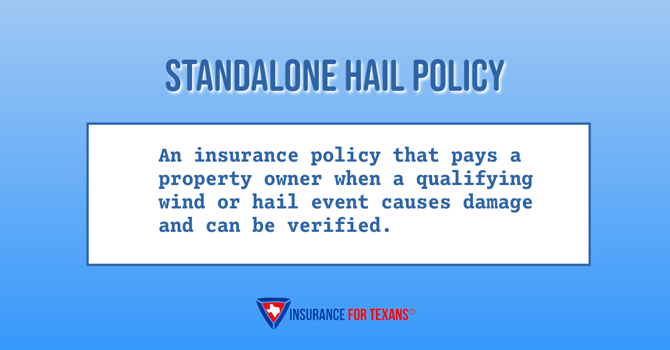
Standalone hail insurance works differently from traditional property insurance. Instead of determining the payment by estimating the entire cost of repairing your building, the policy looks for a specific weather event and evidence of damage. When the requirements of the policy are met, it pays the policyholder directly.
For Texas churches and businesses facing higher wind and hail deductibles, that can create another way to manage one of their largest property risks.
The Hailstorm at the Abilene Church
A church in Abilene has several million dollars worth of property. The church's commercial property policy has a 5% wind and hail deductible. That saves money on the annual premium, but it also leaves the church responsible for a significant amount of money if a storm damages the roof. The church decides to purchase a standalone hail policy for an additional layer of protection.
A severe hailstorm later moves across Abilene and damages the church roof. Weather data confirms that a qualifying hail event occurred at the church's location, and the roof damage can be documented. Instead of relying only on the traditional property claim, the church now has another source of cash available from the standalone hail policy. That money belongs to the church and can be used however they desire. They could use it to pay their deductible or simply pay a roofer directly without ever filing a claim against their property insurance.
How Does a Standalone Hail Policy Work?
The policy is built around a weather trigger. Two things need to happen in order for a claim to be paid out.
- Weather data confirms that a qualifying wind or hail event occurred at the insured location.
- Damage from that event is documented by the church.
If the requirements of the policy are met, the policy pays based on the amount of coverage that was purchased. Commercial standalone hail policies can provide higher limits than the versions designed for homeowners. That allows a church or business to select a dollar amount that makes sense for a much larger property exposure.
Is a Standalone Hail Policy a Deductible Buydown?
No. These are two different types of insurance. A deductible buydown policy is designed specifically to reduce the deductible on your primary property policy. A standalone hail policy does not change the deductible on your property insurance. It is a separate policy that provides a cash payment if your property was damaged by a qualifying wind or hail event.
You could use that money to help cover a large deductible, but that does not make the policy a deductible buydown. It is a policy that stands on its own.
How Can a Higher Deductible and Standalone Hail Policy Work Together?
This is where standalone hail insurance can become part of a larger risk strategy. Higher wind and hail deductibles can sometimes reduce the cost of commercial property insurance because the church or business agrees to retain more of the risk. A larger deductible means more money out-of-pocket when hail damages your property.
A standalone hail policy provides a separate source of money for that exposure. In the right situation, paying less for the primary property policy and using some of those savings to purchase standalone hail coverage can produce a better overall solution. The goal is to manage your Texas church’s total cost of risk.
Evaluating Your Risk Exposure
Through our True Texas Church Insurance program, we look at how all of these pieces work together.
We ask questions first. What is your wind and hail deductible? How much could your organization comfortably absorb? How much standalone hail coverage would make sense? And does the combined cost create a better solution than simply buying the lowest deductible available?
A standalone hail policy does not lower your deductible. It gives you another source of cash when a qualifying Texas wind or hail event occurs.
For churches and businesses with expensive property, that flexibility can completely change how they manage their hail exposure.