Skip to content
True Texas Church Insurance - Original

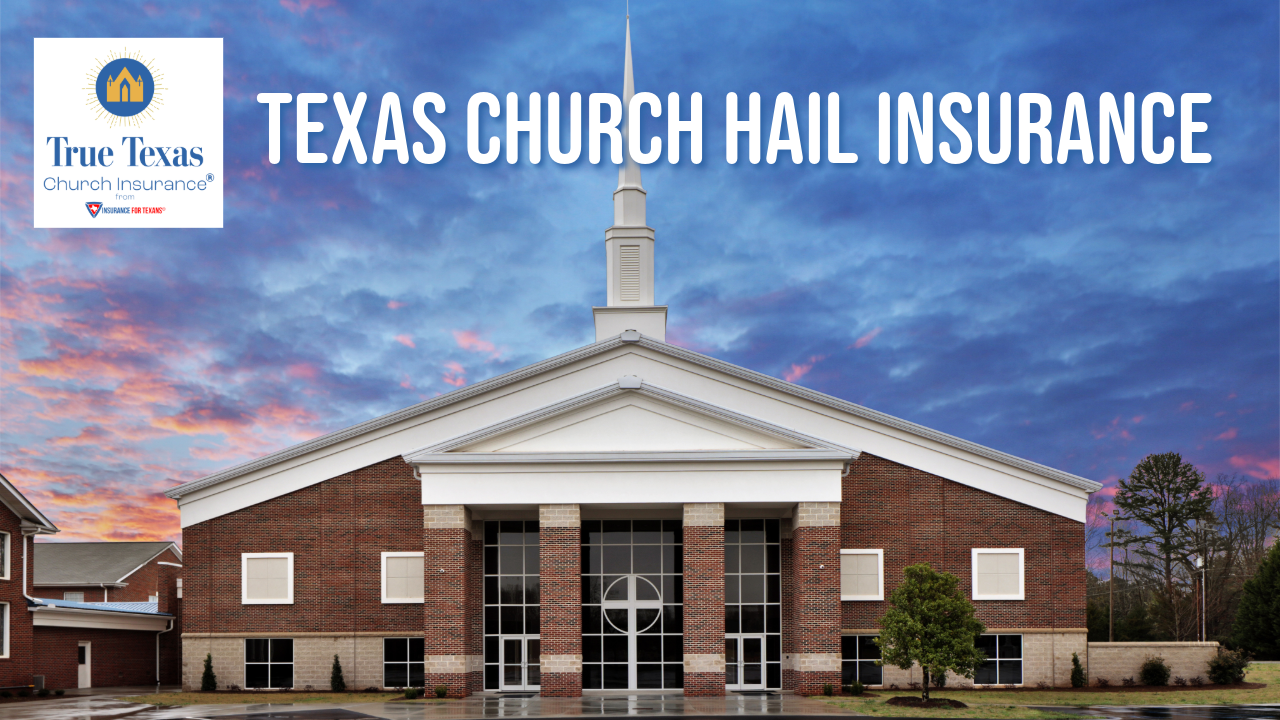
Texas Church Hail Insurance

Hail Insurance protects Texas churches from financial losses due to property damage caused by hail. For most Texas churches, hail coverage is part of their Texas church property insurance. Separate wind and fail policies or supplemental coverage is also available. Deductibles, roof settlement terms, sublimits, and exclusions determine how much the policy actually pays after a storm.

Hail Is a Major Property Risk in Texas

Hail is one of the biggest weather threats facing Texas property owners. Severe storms develop quickly over parts of the state and produce large hail that damages property. Roofs, HVAC systems, windows, siding, signs, and vehicles can be damaged or destroyed in a matter of minutes.

For Texas churches, the risk is even greater because of their large footprint. Church buildings are typically bigger than a residential home and have large roofs. One strong hailstorm can create hundreds of thousands of dollars in damage. That is why hail coverage deserves special attention for Texas churches.

The Hail Claim the Church Could Not Afford

Mike was a pastor at a church in Lubbock. They had owned their church building for many years. The sanctuary, classrooms, offices, and fellowship hall had grown along with the congregation. The property was now insured for several million dollars. Last spring, one of the infamous west Texas thunderstorms popped up and turned the sky green over Lubbock. Within minutes, the storm was throwing baseball sized hail stones down onto the city. Mike’s church was in its path across town.

After the storm had passed, Mike took other leaders from the church and walked around the property to assess the damage. They found cracked shingles, dented gutters and a battered air conditioning unit. They were confident that their property insurance would cover their losses. But when they talked with the adjuster, they found out that their wind and hail deductible was 5% of their property’s value. This meant that they would be out tens of thousands of dollars before the insurance company even paid a single dollar towards the repairs.

The church leaders had let the policy renew year after year without reviewing it. Over time, their policy deductible and terms had changed, but no one pointed it out to them. They learned the hard way that Texas churches need a church insurance specialist that knows how to help leaders to understand their financial risks.

How Does Hail Insurance Work?

For most Texas churches, hail coverage is included as part of the church’s Property Insurance. Wind and hail losses usually have a separate deductible from other types of property claims.

If hail damages the roof, HVAC equipment, windows, siding, or other covered property, the insurance company first determines whether the damage is covered. Wind-driven rain that enters through storm damage can also become part of the same wind and hail claim.

The amount the church receives then depends on the policy terms. The wind and hail deductible is applied along with any roof settlement provisions, depreciation, sublimits, or exclusions.

That is why two churches can suffer similar damage from the same storm and receive very different claim payments. One may have Replacement Cost coverage and a manageable deductible, while another may face depreciation, a roof payment schedule, or a much larger percentage deductible.

The real value of hail coverage is found in these details, not just the building limit shown on the declarations page.

Pay Attention to Wind and Hail Deductibles

Within the last several years, percentage wind and hail deductibles have become the norm for property insurance policies in Texas. The important part is understanding what that percentage means in actual dollars.

Unlike a flat deductible of a fixed amount, a wind and hail deductible is calculated as a percentage of the insured property value stated in the policy. Depending on the policy wording, that percentage may apply to the damaged building, the location, or another stated property value.

For example, if a church building is insured for $2 million:

  • A 1% deductible equals $20,000
  • A 2% deductible equals $40,000
  • A 5% deductible equals $100,000

If the building is insured for $5 million, a 2% deductible could mean the church is responsible for $100,000 before the insurance company begins paying the covered portion of the claim.

That is why church leaders should never look at 2% and assume it is a small deductible. Ask your church insurance agent to help you to understand what your wind and hail deductible would be in actual dollars and cents.

Standalone Hail Policies

Hail deductibles in Texas have become unaffordable for many churches. Thankfully, there is an option to purchase a separate standalone hail policy in addition to your regular property policy that can help some churches save on overall costs.

This policy is supplemental insurance designed to reduce the church's out-of-pocket costs due to wind or hail damage. Instead of replacing the main property policy, the standalone policy works alongside it to pay you a set amount of cash for damage caused by a covered wind or hail event.

For example, a church with a $5 million building and a 2% wind and hail deductible could be responsible for $100,000 after a covered hail loss. A separate standalone hail policy pays out cash that you can use towards your deductible or to pay for a new roof without getting your property policy involved at all. The standalone hail policy does not replace the church’s property insurance policy. You still need a property policy to cover other perils besides wind and hail. However, it works alongside the primary policy to cover damage caused by wind and hail.

A standalone hail policy is not the right solution for every church, but it is an option worth discussing with your church insurance agent.

Texas Church Hail Insurance Web Page

Replacement Cost vs. Actual Cash Value

The deductible is only one part of a Texas church’s total cost of risk. Church leaders also need to understand how the insurance company will value damaged property after a hail claim.

Replacement cost coverage is designed to pay the cost to repair or replace covered property with new materials. On the other hand, actual cash value pays a depreciated amount based on factors such as age and condition. The difference in the final claim payment can be significant.

Church leaders should also know that one policy can value different types of property in different ways. For example, the building may have replacement cost coverage while the roof is settled at actual cash value.

Even though an older roof may still have years of useful life, subtracting depreciation can leave the church responsible for a large part of the replacement cost after a hailstorm. This is one of the reasons why a lower premium is not always a better deal. Texas church leaders need to evaluate their total cost of risk instead by taking into account all of their out of pocket expenses.

Roof Payment Schedules and Sublimits Matter

Some policies go beyond traditional Replacement Cost or Actual Cash Value and use a roof payment schedule or separate roof limitation.

A roof payment schedule reduces the percentage the insurance company will pay as the roof gets older. A roof sublimit may cap the total amount available for roof damage even though the building itself is insured for a much larger amount.

These provisions can dramatically change the outcome of a hail claim.

Church leaders should know whether the roof is covered at Replacement Cost, Actual Cash Value, subject to a payment schedule, or limited by a separate dollar amount.

Do not assume the building limit tells you how much money is available for the roof.

Metal Roofs and Cosmetic Damage

Metal roofs are durable, but hail can leave significant dents without causing leaks or affecting the roof’s function.

Some property policies exclude or limit cosmetic hail damage. That means a roof can look badly damaged while the insurance company still considers it functional.

Churches with metal roofs should review the policy’s cosmetic damage language before a storm happens.

Hail Damage Is Not Limited to the Roof

The roof gets most of the attention after a hailstorm, but church property includes much more than shingles and metal panels. Hail and the storm surrounding it can damage windows, stained glass, exterior finishes, rooftop HVAC equipment, signs, outdoor property, and church-owned vehicles.

Once the building’s roof is damaged, rain can also enter the church and damage ceilings, flooring, furniture, sound equipment, pipe organs, classrooms, and other property inside. Each type of property may have its own limits and settlement terms.

Water Damage After a Hailstorm

Hailstorms often bring heavy rain. If hail damages the roof, windows, or other parts of the building, water can enter the church and cause additional damage inside.

After the storm, church leaders should document the damage with photos and take reasonable steps to prevent it from getting worse, such as covering openings or removing standing water when it is safe to do so.

Save receipts for emergency repairs and report the claim promptly. Avoid making major permanent repairs or throwing away damaged property until the insurance company has had a chance to inspect it, unless immediate action is needed to protect the building.

Business Income Can Matter After a Major Hail Loss

A hailstorm can affect more than the building. If severe roof and water damage makes the church unusable, worship services, childcare programs, schools, meetings, and other ministries may have to relocate.

Commercial Property Insurance can include Business Income and Extra Expense protection that helps with certain financial losses when a covered property claim interrupts normal operations. For churches that operate tuition-based schools, daycares, or other revenue-producing ministries, this can be especially important.

Coastal Texas Churches Need Special Coverage

Churches along the Texas coast may need separate wind and hail coverage because some Commercial Property policies exclude those losses. Eligible churches may obtain wind and hail protection through the Texas Windstorm Insurance Association while keeping a separate policy for other property risks.

Church leaders should understand how the policies work together, which deductibles apply, and whether the coverage limits match the church’s actual property values.

Strong Roof Management Starts Before the Storm

Insurance cannot make an old or damaged roof new again.

Texas church leaders should know their roof's age, material, condition, repair history, and approximate replacement date. When a roof is replaced, the insurance company should be notified so its records reflect the correct age and type of construction. Regular inspections can also identify maintenance issues before the next hailstorm exposes them.

When replacement becomes necessary, impact-resistant roofing materials may be worth considering. Some insurers may offer more favorable pricing or underwriting for roofing materials designed to better withstand hail.

Texas Churches Need a Church Insurance Specialist

A generic commercial insurance agent may see a building value, roof age, and deductible. General agents do not understand how churches operate. You need the expertise of a church insurance specialist.

Our Texas church insurance specialists understand how a large hail deductible can affect a church budget, how roof settlement provisions change claim payments, and how specialized property can create additional gaps. We also understand which insurance companies are willing to cover Texas churches and how different carriers approach roofs, deductibles, and hail exposure.

True Texas Church Insurance

Texas church leaders cannot stop the next hailstorm, but they can prepare for what happens after it.

Property Insurance is only the starting point. Your deductible, roof settlement terms, sublimits, exclusions, and hail-specific coverage options determine how much the church may have to pay out of pocket after a storm.

True Texas Church Insurance helps you understand that risk before a claim happens. We review your current coverage, calculate the church’s real hail exposure, and look for options to improve your coverage.

Click the button below to schedule a hail coverage review with our church insurance specialists.

Click To Cover Your Church!


True Texas Church Insurance Process

Step One: Understand the Property and Roof

We review the church buildings, roof age and materials, current values, prior hail claims, specialized property, and existing wind and hail coverage. Most importantly, we translate percentage deductibles and policy provisions into actual dollars so Texas church leaders understand their financial risk.

Step Two: Build the Hail Insurance Strategy

We compare deductibles, roof settlement terms, sublimits, exclusions, and available carrier options. When a property policy includes a deductible that is too large for the church to comfortably absorb, we can also explore whether a separate Hail Deductible Buydown policy makes sense. The goal is not simply to find the smallest premium. It is to evaluate and plan for the church’s total cost of risk.

Step Three: Present the Church to Insurance Companies

We tell underwriters the full story of the property, including roof age, construction type, maintenance, upgrades, claims history, and risk management. Not every insurance company views Texas hail exposure the same way. Our job is to find carriers that understand Texas churches and help leaders to compare the real differences between their options.

Why Texas Churches Turn To True Texas Church Insurance

300+
Churches Trusted By True Texas Church Insurance
600+
Churches Helped In Some Way By True Texas Church Insurance
The Promise Of Certainty

We Wrote The Book On Texas Church Insurance

  • Real Stories About Texas Churches
  • Practical Advice For Church Leaders
  • Our Three Step Process
  • Why Coverage Matters
  • Your Guide To Certainty

What Texans Have To Say About Our Process

Are You Ready To Protect Your Church?