General Liability Insurance Protects Against Everyday Accidents
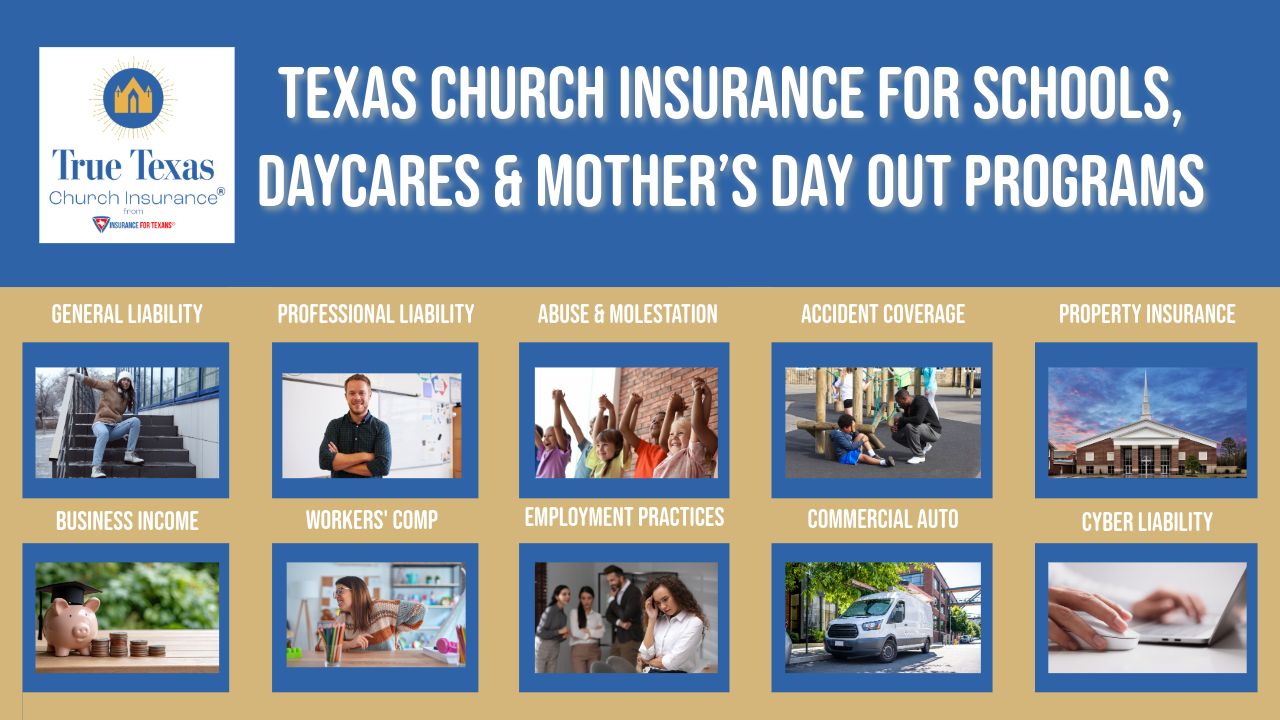
Children fall, parents trip, and playground accidents happen. General Liability Insurance helps protect the school or childcare program when it is accused of causing bodily injury or property damage to someone else.
For example, coverage may respond if a parent is injured because of an unsafe walkway or a child is hurt because playground equipment was not properly maintained.
Because schools, daycares, and Mother’s Day Out programs have children, parents, employees, and visitors on the property throughout the week, they need General Liability coverage that specifically includes those operations. Church leaders should not assume the church’s regular liability policy automatically provides that protection.
Professional Liability
A school or childcare program has responsibilities that go beyond maintaining a safe property. Teachers and caregivers supervise children, make educational decisions, communicate with parents, and follow policies that affect each child’s care.
Professional Liability, sometimes called Educators Liability, helps protect the program when someone claims those professional duties were handled improperly.
That could include allegations of inadequate supervision, poor instruction, or failure to follow established procedures. General Liability and Professional Liability work together because they protect against different types of claims.
Sexual Abuse and Molestation Coverage and Reporting Requirements
Church-operated schools and childcare programs place teachers, employees, and volunteers in positions of trust with children every day. Sexual Abuse and Molestation Liability helps protect the organization and innocent insured people when allegations involve abuse, molestation, grooming, negligent supervision, or failures in screening and oversight.
Insurance is only part of the protection. The program should also maintain strong background checks, supervision rules, child protection policies, and clear reporting procedures.
Texas law requires suspected child abuse or neglect to be reported. Church and school leaders should not wait to complete their own investigation before making a legally required report. Employees should understand when and how to report concerns, regardless of whether the accused person is a teacher, volunteer, pastor, or other trusted member of the ministry.
Sexual Abuse and Molestation coverage can help the organization respond to a claim, but it does not replace the church’s responsibility to protect children and follow Texas reporting requirements.
Student Accident Coverage
Not every student injury means the school or church was negligent. A child may get hurt during recess, physical education, or another normal activity.
Student Accident Insurance can help pay medical expenses for covered injuries without requiring the family to prove the program was at fault.
It does not replace General Liability Insurance. It provides an additional layer of protection when a student is injured during a covered school or childcare activity.
Property Insurance Must Reflect Weekday Use
The same building can present a different property risk when it becomes a school or daycare five days a week. Appropriately written property insurance is the cornerstone of any insurance coverage.
Classrooms may contain educational equipment, computers, toys, furniture, curriculum materials, musical instruments, and other property that was not included when the church originally purchased its insurance.
The school may also add playground equipment, portable buildings, kitchens, security systems, or specialized classroom equipment.
The insurance company needs to know about these changes.
Property values should include the contents used by the educational program, and the policy should reflect how each building is actually being used. School-focused insurance programs may include additional protection for educational equipment and other property that standard church coverage may not adequately address.
Business Income Can Protect Tuition Revenue
Property Insurance can repair a damaged building, but it does not automatically replace the tuition revenue lost while the school or daycare is closed.
Business Income coverage may help replace lost tuition and certain continuing expenses after a covered property loss. For programs that depend on tuition to operate, this coverage can be an important part of the insurance plan.
Workers’ Compensation Exposure
A school or childcare program can significantly increase the church’s payroll and employee-related risk. Workers’ Compensation covers medical expenses and lost income when an employee is injured on the job.
Texas does not require most private employers to carry Workers’ Compensation, but churches that do so receive important protections under the state system. Employee classifications also matter because different job duties can affect both premium and coverage.
Employment Practices Liability
Adding a school or daycare can significantly increase the church’s number of employees.
More employees mean more hiring decisions, performance reviews, discipline, terminations, complaints, and workplace relationships.
Employment Practices Liability Insurance covers the church’s liability when a teacher, administrator, caregiver, or job applicant alleges wrongful termination, discrimination, harassment, retaliation, or another covered employment practice.
The school may have its own director and management structure, but the church can still be pulled into an employment lawsuit.
Texas church leaders should confirm that employees of the educational program are included within the church’s EPLI coverage.
Commercial Auto Insurance
Some church schools and childcare programs transport students for field trips, athletic events, before-and-after-school care, or other activities.
Those trips may involve church-owned buses and vans, rented vehicles, or employees using their personal automobiles.
Commercial Auto Insurance should reflect how the program actually moves students.
Church-owned vehicles should be insured under the church’s Commercial Auto policy. Hired and Non-Owned Auto coverage should also be considered when vehicles are rented or employees use personal automobiles for school business.
The church should use the same driver screening, training, maintenance, and transportation procedures for the school that it uses for other church activities.
Cyber Liability
Schools and childcare programs store sensitive information about students, families, and employees while relying on online payments, communication apps, and school management systems.
Cyber Liability Insurance helps the program to respond when that information is exposed or a computer system is compromised. The church should not assume that a software provider or payment processor carries all of the cyber risk.
The Legal Entity Needs to Match the Insurance Policy
Church-operated programs are not always organized the same way.
One church may operate its school directly under the church’s legal entity. Another may create a separate nonprofit corporation with its own board, employees, bank accounts, and contracts.
That distinction matters.
The insurance policy needs to identify the organizations that actually operate the program. A separate school corporation should not simply be assumed to have coverage because it uses the church’s building or shares leadership with the church.
Texas church leaders should review the legal entity, named insureds, property ownership, payroll, contracts, and governance structure together with the school and their insurance agent.
Here’s a concise combined version:
Church Insurance Alone May Not Be Enough
A church that operates a school, daycare, or preschool takes on risks that go beyond normal church activities. More children, employees, payments, records, and daily supervision mean the insurance program needs to grow with the ministry.
Good insurance should also be supported by strong procedures. Clear rules for supervision, screening, child pickup, safety, emergencies, transportation, and incident reporting can reduce risk and help the program respond consistently when something goes wrong.
The goal is not just to have coverage. It is to build an insurance and risk management plan that fits how the school or childcare program actually operates.
Texas Churches Need a Church Insurance Specialist
A generic commercial insurance agent may not even understand churches or schools separately, let alone when they are operating together.
A church insurance specialist understands that a church operated school, daycare or Mother's Day Out program may share buildings, employees, leadership, vehicles, technology, and financial resources with the church while creating completely different insurance exposures.
Those differences affect which carriers will consider the risk, what coverage needs to be added, how employees are classified, and whether the school or childcare program is actually included in the policy. True Texas Church Insurance helps church leaders look at the entire operation rather than treating the school or daycare as one small line on an insurance application.
Protect Your Texas Church
A school, daycare, or Mother’s Day Out program can be one of the most valuable ministries your church provides. It can also create some of the church’s largest insurance risks.
Do not assume your existing church policy automatically covers the weekday program. True Texas Church Insurance can review how the program operates, identify coverage gaps, and help build an insurance strategy that protects the ministry and the children in its care.
Click the button below to schedule a review with our church insurance specialists and make sure your school, daycare, or Mother’s Day Out program is properly protected.