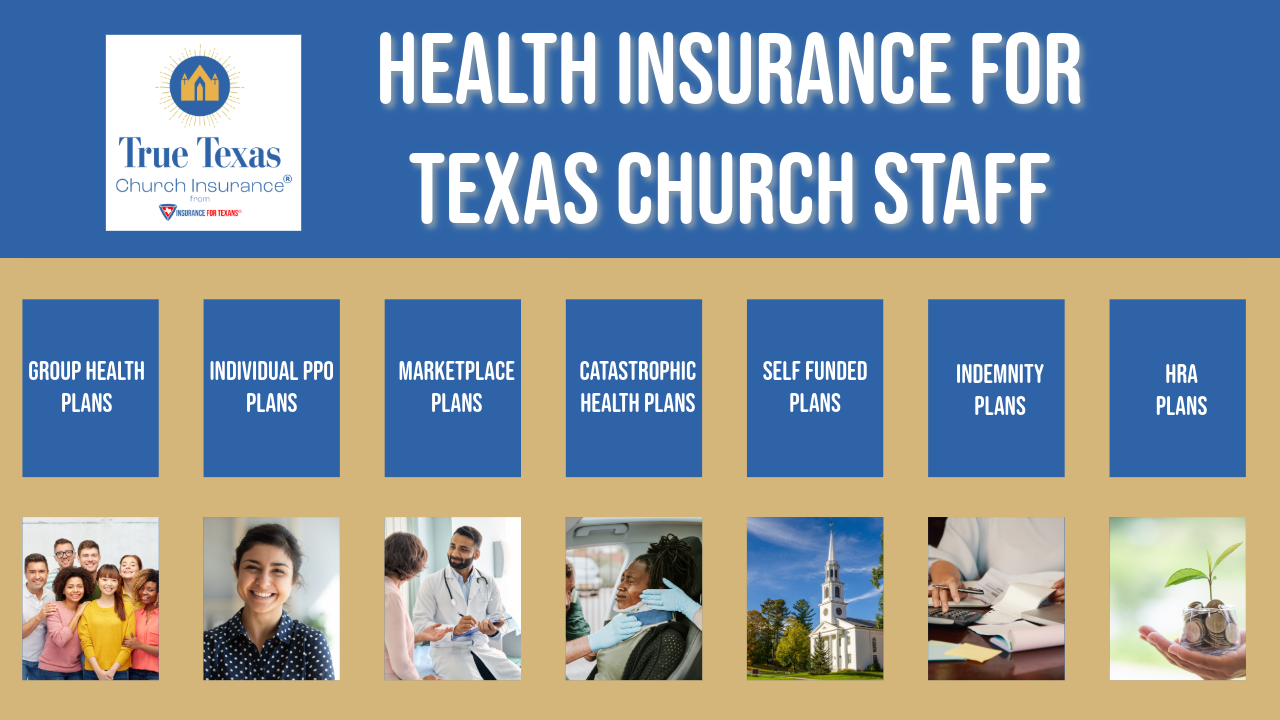
Health Insurance helps pastors and church employees pay for medical care, prescriptions, hospital stays, preventive care, and other healthcare expenses. Churches can provide these benefits in several ways: traditional group health insurance, individual health plans, Marketplace coverage, catastrophic plans, and supplemental indemnity plans.
The right approach depends on the size of the church, their budget, the needs of the church’s employees, and how much flexibility the church’s leaders want to provide.
Health Insurance Is Not One Size Fits All
Providing health insurance can be one of the most valuable benefits a church offers their staff. It can also become one of the largest expenses in the church budget. The challenge is that every employee has different needs.
A senior pastor may need coverage for a spouse and children. An administrative employee may have a spouse who already provides family coverage. A younger youth pastor may need only individual coverage, while another employee may have doctors or prescriptions that require a specific network. A traditional group plan may work well for everyone, but sometimes it is cost prohibitive for the church’s budget.
Texas churches have several ways to approach health insurance. Understanding those options can help Texas church leaders to build a benefit that takes care of employees without putting unnecessary pressure on the church’s budget.
Here’s a more narrative version that makes the “group insurance is not the only option” point much more clearly:
The Renewal That Changed the Conversation
Every fall, a church in Waco went through the same routine. The health insurance renewal arrived, the finance committee reviewed the increase, and the church’s leaders tried to figure out how much more the church could afford to contribute. This year, the increase was too large to continue with this same plan. They needed a different approach.
If the church absorbed the entire increase, there would be little room in the church’s budget for ministry activities. If the church’s leaders passed the cost to employees, several families would struggle to afford their coverage. At first, the committee felt stuck. They thought their only choices were to renew the group plan or stop offering health insurance altogether.
Then they began looking at the staff one person at a time. One employee already had coverage through his wife’s plan. Another staff member wanted a plan with access to doctors outside the group network. A younger staff member who didn’t use much health care wanted a lower-cost option. The church secretary and her family could find better coverage through the individual market. This knowledge changed the conversation.
The church leaders realized that they did not necessarily need one group plan that tried to work for everyone. They needed a strategy that helped each employee find a unique health insurance option while giving the church control over what it could afford to contribute.
For Texas churches, group health insurance is only one option. Individual plans, Marketplace coverage, PPO options, or simply just providing a health care stipend can provide employees with more choice while giving the church greater control over its benefits budget.
Group Health Insurance
Group Health Insurance can be a great fit for churches with enough participating employees and a plan that offers a good balance of cost, benefits, and provider access. While employers in Texas with fewer than 50 employees are not legally required to provide health insurance for their staff, this benefit is a great way to attract and retain talented church staff.
With the help of a health insurance agent, the church chooses a group plan, contributes toward the premium, and eligible employees decide whether to enroll. A group plan simplifies things for church leaders as it gives them just one benefits package to manage. The challenge is that group plans do not work equally well for every church. Premiums can become expensive for employees, especially for dependent coverage. In addition, participation or employer contribution requirements may limit the available options.
For some churches, a group plan is the best strategy. For others, individual coverage may provide more flexibility and better value for both the church and its employees.
Individual PPO Health Insurance
In Texas, individual PPO health plans are available and can be a good option for church employees who want more flexibility in choosing doctors and hospitals.
A PPO typically allows members to use both in-network and out-of-network providers, although staying in-network usually costs less. This can be especially helpful for employees who travel, see specialists, or want access to a broader provider network.
Availability and pricing vary by location, so employees should always review the provider network before enrolling. Individual PPO plans purchased outside the Marketplace also do not qualify for Marketplace premium tax credits.
Health Insurance Marketplace Plans
Marketplace plans are ACA-compliant individual health insurance plans that cover major medical expenses, prescriptions, preventive care, and other essential health benefits.
In Texas, Marketplace coverage is commonly offered through HMO or EPO networks. These plans can provide good coverage, but the provider networks are often more limited than a PPO, making it important to check doctors, hospitals, and specialists before enrolling.
Marketplace subsidies also changed significantly in 2026. The enhanced premium tax credits available from 2021 through 2025 expired, although traditional premium tax credits remain available for eligible households generally earning between 100% and 400% of the federal poverty level.
For some church employees, Marketplace coverage can still be a good option. For others, higher premiums or narrower provider networks may make group coverage or an individual PPO a better fit.
Catastrophic Health Insurance
Catastrophic Health Insurance is designed for people who want protection from large, unexpected medical expenses without paying for comprehensive coverage they may not use.
These plans focus on major health events such as hospitalizations, surgeries, cancer treatments, and heart attacks. Depending on the plan, they may offer relatively low deductibles for covered major illnesses while leaving routine care, doctor visits, and prescriptions to be handled separately.
In Texas, catastrophic coverage is not limited to ACA Marketplace plans. Private insurance companies also offer catastrophic plans to people under age 65, although those plans may require medical underwriting.
For church employees who rarely use healthcare, use Direct Primary Care for routine needs, or find comprehensive ACA coverage too expensive, a catastrophic plan can be an affordable way to protect against a major medical event. It is not the right fit for everyone, so the benefits, exclusions, network, and underwriting requirements should be reviewed carefully before enrolling.
Fixed Indemnity Health Plans
Fixed Indemnity Insurance pays a set cash benefit when a covered medical event happens. For example, the policy may pay a specific amount for a hospital stay, surgery, or doctor visit.
These plans can help with deductibles, copays, and other out-of-pocket costs, but they are not a replacement for comprehensive major medical insurance.
For some church employees, Fixed Indemnity coverage can be a useful supplement to another health plan.
Self-Funded Health Plans
A Self-Funded Health Plan allows the church to pay employee medical claims directly instead of paying a traditional insurance company to assume all of the risk.
These plans can give larger churches more control over plan design and healthcare costs, but they also require careful funding, administration, and risk management. Many self-funded plans use Stop-Loss Insurance to protect the church from unusually large claims.
For churches with enough employees and predictable cash flow, self-funding can be another strategy worth considering.
Funding Individual Coverage
A church does not have to offer one traditional group plan to help employees with health insurance.
Health Reimbursement Arrangements allow the church to contribute a set amount toward employees’ individual health insurance and certain medical expenses. This gives the church more control over its benefits budget while allowing employees to choose coverage that better fits their needs.
These arrangements must follow IRS rules, so churches should work with a health insurance professional and tax adviser before setting one up.