Sexual Abuse and Molestation Liability Insurance helps protect a church from claims arising from alleged sexual abuse, molestation, or misconduct involving an employee, volunteer, pastor, ministry leader, or another person acting on the church’s behalf.
Depending on the policy, it may pay legal defense costs, settlements, judgments, and certain expenses connected to the church’s response.
Protecting Vulnerable People Is a Sacred Responsibility
Churches regularly work with children, teenagers, older adults, people with disabilities, and others who may be especially vulnerable to abuse.
Children attend Sunday school, Vacation Bible School, camps, retreats, and youth activities. Adults may seek counseling, recovery support, financial assistance, or help during a personal crisis.
These ministries create opportunities to care for people during important moments in their lives. They also place a serious responsibility on the church to screen, train, supervise, and respond when something does not seem right.
Sexual Abuse and Molestation Liability Insurance cannot prevent abuse. It can provide financial resources to help the church respond when an allegation threatens the church’s mission and the people that are entrusted to its care.
The Allegation That Changed Everything
A growing Texas church needed more volunteers for its youth ministry. One longtime member had been around the church for years, knew many of the families, and seemed eager to help.
Because everyone knew him, the church’s leaders allowed him to begin serving with the young people before he had completed the church’s normal screening process. Over time, he began communicating privately with several students and occasionally gave them rides home after youth events.
Months later, a parent contacted the pastor with a serious allegation involving inappropriate messages and contact with her child. The church immediately removed the volunteer from the youth ministry and reported the allegation to the proper authorities. It also contacted its insurance company and legal counsel.
The investigation had only begun, but the church was already facing difficult questions. Was the volunteer properly screened? Why was he allowed to communicate privately with students? Who supervised him? Did church leaders ignore warning signs?
The lawsuit did not only name the accused volunteer. It also named the church and alleged negligent screening, training, supervision, and retention.
That is why abuse and molestation coverage matters. Even though church leaders did not know about the alleged conduct, the church still has to defend the way it selected and supervised the accused volunteer.
What Does Sexual Abuse and Molestation Liability Cover?
The exact protection depends on the insurance company and policy wording. Coverage may respond to several parts of an abuse or misconduct claim.
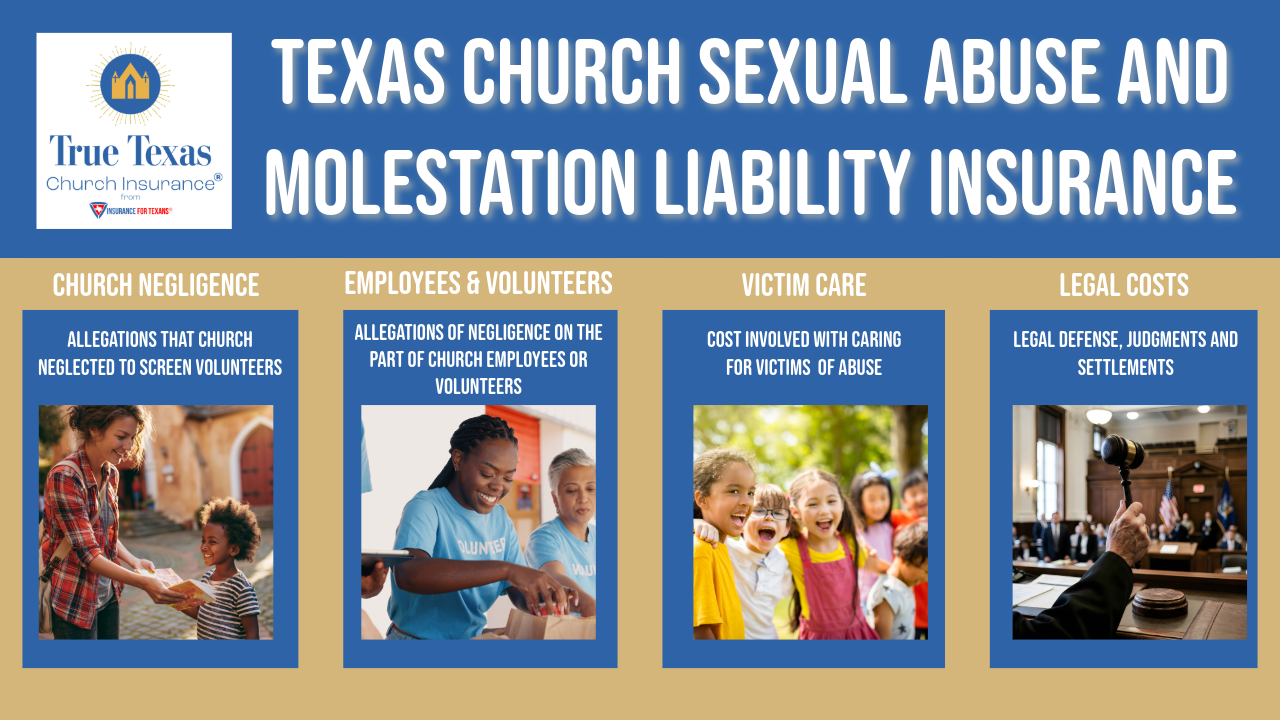
Church Negligence
A claimant may allege that church leadership failed to take reasonable steps to protect a child, teenager, or vulnerable adult.
These claims often focus on the church’s own decisions rather than only the actions of the accused person. Allegations may involve negligent hiring, screening, training, supervision, retention, or reporting.
Claims Involving Employees and Volunteers
Coverage may apply when an allegation involves a pastor, employee, teacher, childcare worker, ministry leader, or volunteer acting on behalf of the church.
Texas church leaders should confirm exactly who qualifies as an insured. A policy may treat employees, volunteers, contractors, and people serving through an outside organization differently.
Victim Care and Crisis Response
Some church-focused policies may provide funds for counseling, victim care, crisis communication, security, or other expenses that follow a serious allegation. These benefits are not included in every policy and may carry separate limits.
Legal Defense Costs
An abuse allegation requires attorneys long before anyone determines what happened or whether the church was responsible. These costs can add up quickly.
The church may need legal help responding to investigators, preserving documents, communicating with families, handling employment decisions, and defending a civil lawsuit. Sexual misconduct coverage pays for these legal costs.
Settlements and Judgments
If the church is found legally responsible for a covered claim, the policy may help pay a settlement or judgment up to the available limit.
Texas church leaders need to review their policy carefully to understand whether defense costs are inside or outside of their policy’s limits.
Occurrence Versus Claims-Made Coverage
Sexual Abuse and Molestation Liability may be written on either an occurrence or claims-made basis. The difference determines which policy responds when an allegation is reported years after the alleged conduct occurred.
Occurrence Coverage
An occurrence policy is triggered by when the alleged abuse took place. If the conduct occurred while the policy was active, that policy may respond even when the claim is made many years later.
For example, suppose an allegation reported today involves conduct from 2018. The church would look to the occurrence policy that covered it in 2018, not necessarily the policy it carries today.
This makes old policies extremely important. Churches should keep complete copies of prior policies, endorsements, limits, and insurance company information permanently.
Claims-Made Coverage
A claims-made policy is generally triggered when the claim is first made against the church. The church must have an active policy when the claim is made, and the alleged conduct normally must have occurred after the policy’s retroactive date.
Some policies are written on a claims-made-and-reported basis. This means the claim must be both made against the church and reported to the insurance company within the required time. Reporting it late can result in no coverage.
Claims-made coverage requires careful attention when changing carriers or canceling a policy. Texas church leaders should protect the church’s original retroactive date and consider prior acts coverage or an Extended Reporting Period when needed.
An Extended Reporting Period may give the church more time to report claims involving conduct that occurred before the old policy ended. It does not cover new acts that happen after coverage is canceled.
Why the Difference Matters
Abuse allegations may not surface until years after the alleged conduct. A church can have Sexual Abuse and Molestation coverage today and still discover that an old claim falls under a prior policy, outside the retroactive date, or into a gap created when carriers changed.
Church leaders should know whether their coverage is occurrence or claims-made, which retroactive date applies, how quickly claims must be reported, and whether prior policies have been preserved. The coverage title and limit alone do not tell the full story.